
Quick Overview of the Boesemani Rainbowfish
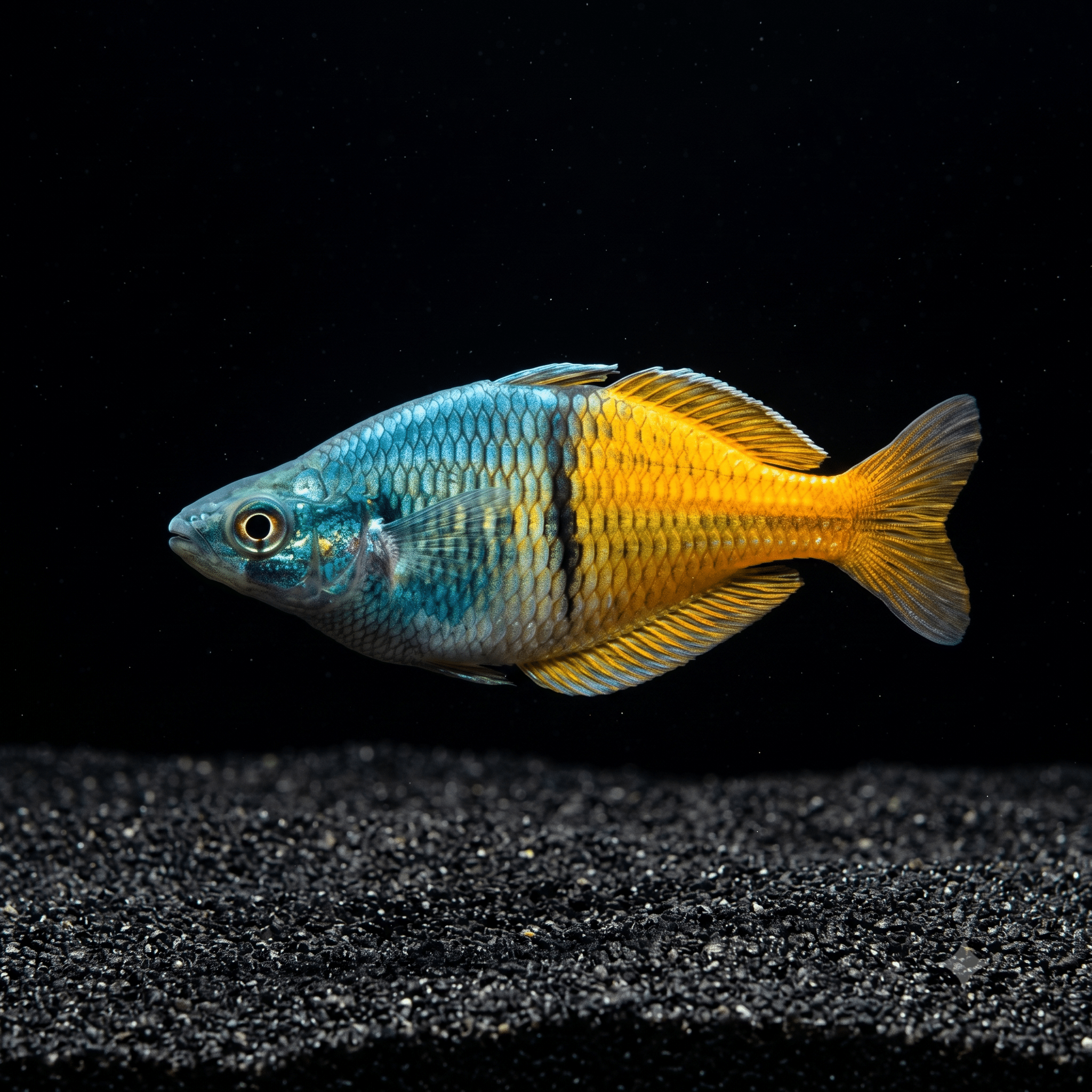
The Boesemani Rainbowfish (Melanotaenia boesemani), natively endemic to the pristine, mineral-rich waters of the Ayamaru Lakes in West Papua, Indonesia, is globally recognized as the undisputed king of the rainbowfish hobby. Reaching a majestic adult size of 3.5 to 4.5 inches (9 to 11.5 cm), mature males undergo an astonishing color transition that looks almost surreal. Their anterior (front) half develops a deep, iridescent midnight-to-electric blue coat with silver highlights, which abruptly fades across their high-backed body into a brilliant, fiery neon-orange and gold tail section. Active, peaceful, and constantly on the move, a school of these fish brings unmatched vibrancy and fluid motion to any large display.
Tank/Plant Profiles & Environmental Requirements
-
Care Level: Very Easy / Exceptionally Hardy (When provided with ample swimming room)
-
Growth Rate / Activity: Fast & Energetic Schooling Behavior
-
Lighting: Moderate to Bright (High-rendering LED lighting makes their dual-tone metallic sheen pop)
-
Temperature: 24°C – 28°C (Thrives naturally in Bacolod’s tropical climate)
-
Tank Placement: Mid-to-Top Water Column Swimmers
-
Minimum Tank Size: 30 Gallons for juveniles; 55+ Gallons long-term for a mature school
Local Care Tips for Bacolod Aquarists
Bacolod Tap Water Match & Oxygenation Needs: The Boesemani Rainbowfish is an extraordinary biological match for Bacolod’s local water supply! Hailing from alkaline limestone lakes in the wild, they naturally thrive in hard, mineral-rich water (pH 7.2–8.2), meaning you can completely bypass costly reverse osmosis filtration or soft-water treatments—just use a quality water conditioner during routine changes. Because they are athletic, high-speed swimmers, maintaining elevated dissolved oxygen levels is key. Ensure your filter outlet creates strong surface agitation or add a small powerhead to keep the water well-aerated during hot Negrense summer months.
Aquascaping Strategy for Fast Swimmers: To showcase the dramatic split-color effect of mature males, house them in an aquarium with a dark background. Because Boesemani Rainbows love to race across the glass, arrange your hardscape elements—like Seiryu stones and local driftwood—along the back and sides to leave a clear, wide “swimming highway” across the front. They are 100% plant-safe and look breathtaking gliding over low green carpets of Monte Carlo or Dwarf Hairgrass. Frame the midground with tough epiphytes like Anubias Barteri or Java Ferns firmly bound to your hardscape. Always leave the rhizomes of these epiphytes exposed above the substrate to keep them from rotting!
Dietary Specifics & Courtship Display: To help mature males unlock their deepest midnight-blues and glowing fiery-oranges, feed them a premium, highly varied diet rich in natural color enhancers. Offer high-protein micro-pellets, spirulina flakes, and regular portions of frozen bloodworms, brine shrimp, or daphnia. They are exceptionally peaceful community residents that thrive best when kept in a school of 6 or more with a balanced ratio of males to females. Keeping females present is the magic trigger that prompts dominant males to flash their brightest neon stripes during energetic morning courtship dances. A tight-fitting lid or mesh cover is 100% mandatory, as their high-speed sprints can lead to accidental leaps.