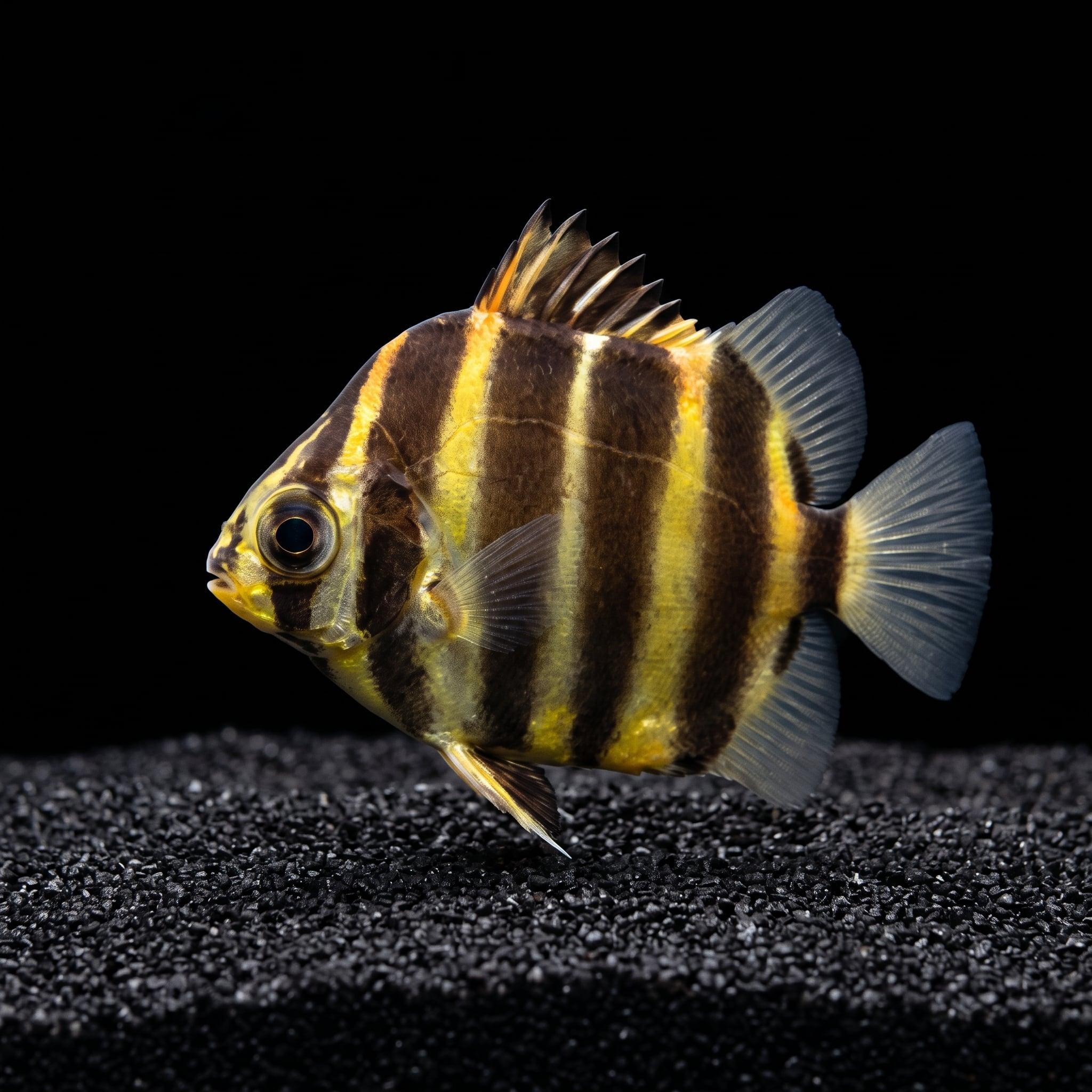

Quick Overview of the African Tiger Scat
The African Tiger Scat (Scatophagus tetracanthus) is one of the most sought-after and impressive species in the scat family. Native to the coastal estuaries, mangrove swamps, and river mouths of East Africa, this high-bodied, disk-shaped species stands out from common spotted scats by displaying thick, vertical jet-black tiger stripes across a warm silver, bronze, or pale yellow body. Reaching an adult size of 8 to 12 inches (20 to 30 cm), African Tiger Scats are fast-moving, energetic, and possess incredible curiosity—frequently swimming up to the glass to interact with their owners during feeding time.
Tank/Plant Profiles & Environmental Requirements
-
Care Level: Moderate (Requires ample swimming space, filtration, and salinity adjustments as they mature)
-
Growth Rate / Activity: Fast Growth; Highly Active Open-Water Column Swimmer
-
Lighting: Moderate
-
Temperature: 24°C – 28°C (Thrives naturally in Bacolod’s tropical climate)
-
Tank Placement: Middle and Upper Water Column Swimmer
-
Minimum Tank Size: 55 Gallons for juveniles; 125+ Gallons for a mature specimen or group (Best kept in groups of 3+ to diffuse social dynamics)
Local Care Tips for Bacolod Aquarists
Bacolod Tap Water & Salinity Transitions: Juveniles adapt smoothly to Bacolod’s neutral-to-slightly-hard tap water (pH 7.2–8.0) when treated with a high-grade dechlorinator. However, because African Tiger Scats naturally inhabit brackish coastal waters, gradually introducing marine salt (SG 1.005–1.015) as they mature improves longevity, coat luster, and overall immune resistance. Maintain strong water turnover and oxygenation using a heavy-duty filter or wavemaker, as they generate a higher bio-load than standard community species.
Plant Considerations & Aquascaping Strategy: Scats are natural grazers with a strong appetite for soft leafy greens, so delicate carpeting plants like Monte Carlo will be eaten. To keep live plants in your hardscape, opt for tough, bitter-tasting epiphytes like large Anubias Barteri or Java Ferns attached to Seiryu rocks or local driftwood—just ensure the creeping rhizomes of these epiphytes remain completely exposed above the substrate to keep them from rotting!
Dietary Specifics & Tankmate Compatibility: African Tiger Scats are voracious omnivores that require a heavy plant-based diet alongside protein. Offer them spirulina flakes, sinking cichlid pellets, Nori seaweed sheets, and regular treats of blanched spinach or cucumber, balanced with frozen bloodworms and krill. They are robust and peaceful toward fish too large to swallow, making them outstanding companions for Mono Argenteus/Sebae, Archerfish, Severums, Silver Dollars, and large Plecos. Exercise care when netting or handling them, as their dorsal fins feature sharp, mildly venomous spines that can inflict a painful sting if handled carelessly!