
Quick Overview of the Imperial Lapis Tetra
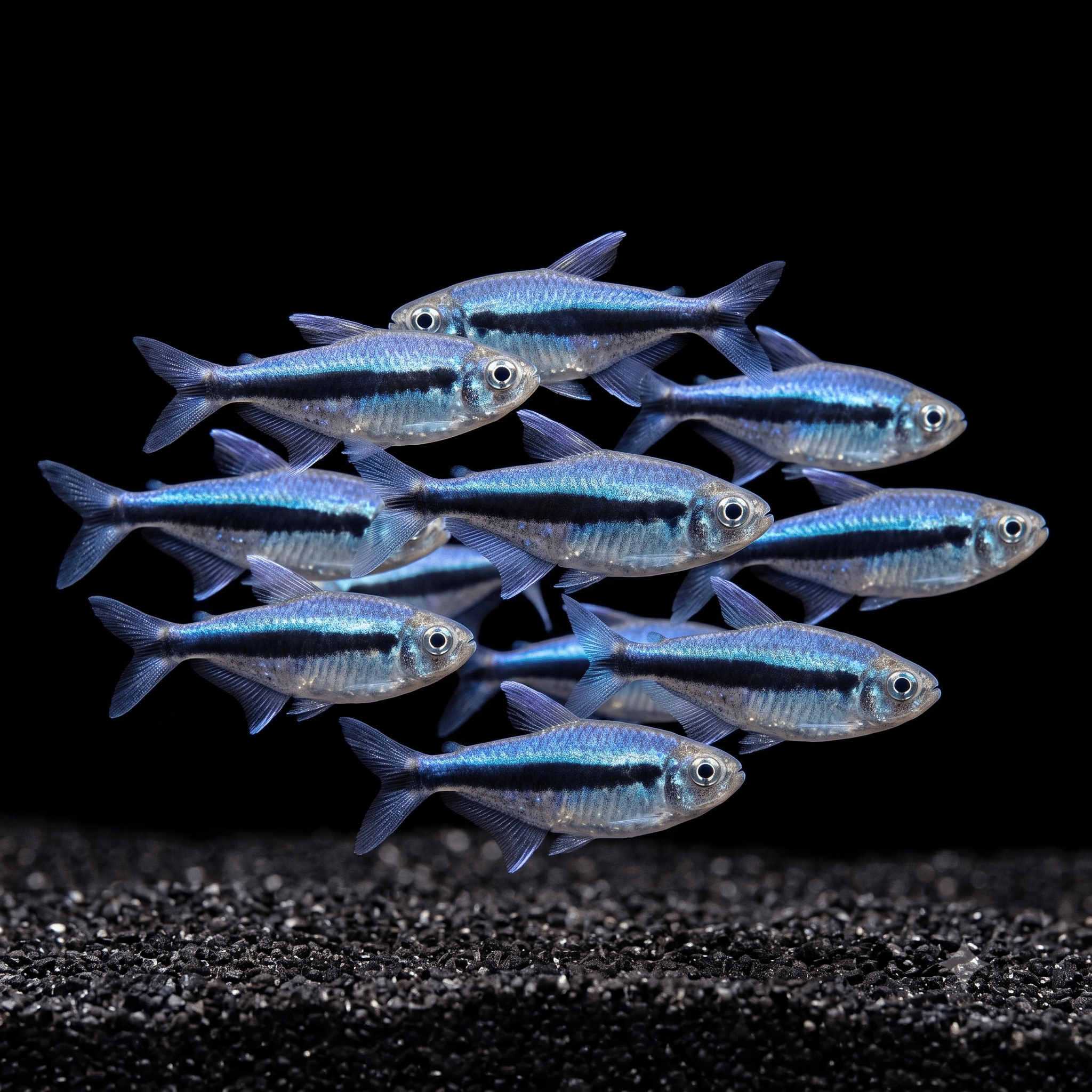
The Imperial Lapis Tetra (Hyphessobrycon lapis) is an exquisite, highly sought-after wild-type nano fish native to the pristine, shaded forest streams of the Mato Grosso region in Brazil. Considered an elite collector’s item within the hobby, it is named after the precious deep blue gemstone, Lapis Lazuli. Under proper lighting, their deep, laterally compressed bodies radiate an intense, metallic neon-blue to violet sheen. This rich coloration is elegantly grounded by a striking black horizontal stripe running along the lower half of the body and extending into the tail, often accompanied by delicate, amber-to-white fin tips. Reaching a compact adult size of about 1.5 inches (3.8 cm), they form elegant, mesmerizing schools.
Tank/Plant Profiles & Environmental Requirements
-
Care Level: Moderate (Requires an established, mature tank setup)
-
Growth Rate / Activity: Active, Peaceful Schooling Fish
-
Lighting: Low to Moderate (Subdued, high-rendering LED lighting makes the deep blue sheen pop)
-
Temperature: 23°C – 27°C
-
Tank Placement: Mid-to-Bottom Water Swimmers
-
Minimum Tank Size: 15 Gallons (Must be kept in schools of 6 or more to ensure confidence and color depth)
Local Care Tips for Bacolod Aquarists
Bacolod Water Management & Buffering: As a premium wild-type species hailing from pristine South American streams, the Imperial Lapis Tetra is highly sensitive to fluctuating water parameters and excessive water hardness. Because Bacolod’s tap water tends to lean hard and alkaline, it is highly recommended to condition their water using a mix of pure RO (Reverse Osmosis) water and treated tap water. Incorporating local Talisay (Indian Almond) leaves or high-quality driftwood is vital; the humic substances and tannins they release naturally buffer the pH downward and protect the fish’s delicate slime coat, unlocking their deepest lapis blue coloration.
Aquascaping & Visual Contrast Layout: To truly appreciate the gemstone-like coloration of this species, house them against a dark background with dense, lush vegetation. They look absolutely spectacular school gliding against vibrant light-green carpeting plants like Monte Carlo or contrasting red stem plants like Rotala H’Ra. Frame the midground with shade-loving epiphytes like Bucephalandra or Anubias Nano attached to intricate spiderwood. Always ensure the rhizomes of these epiphytes remain completely exposed above the soil to prevent rot.
Dietary Enhancement & Tank Safety: To maintain their intense blue pigmentation and overall vitality, feed them a premium, highly varied diet. Offer high-grade micro-pellets, crushed vitamin flakes, and regular portions of frozen foods like daphnia, cyclops, and baby brine shrimp. They are incredibly peaceful community fish that pair perfectly with other gentle nano schoolers and Caridina/Neocaridina shrimp. Because they can easily startle and sprint at high speeds when room lights change, a secure, tight-fitting lid or custom mesh cover is absolutely mandatory to prevent accidental jumping.