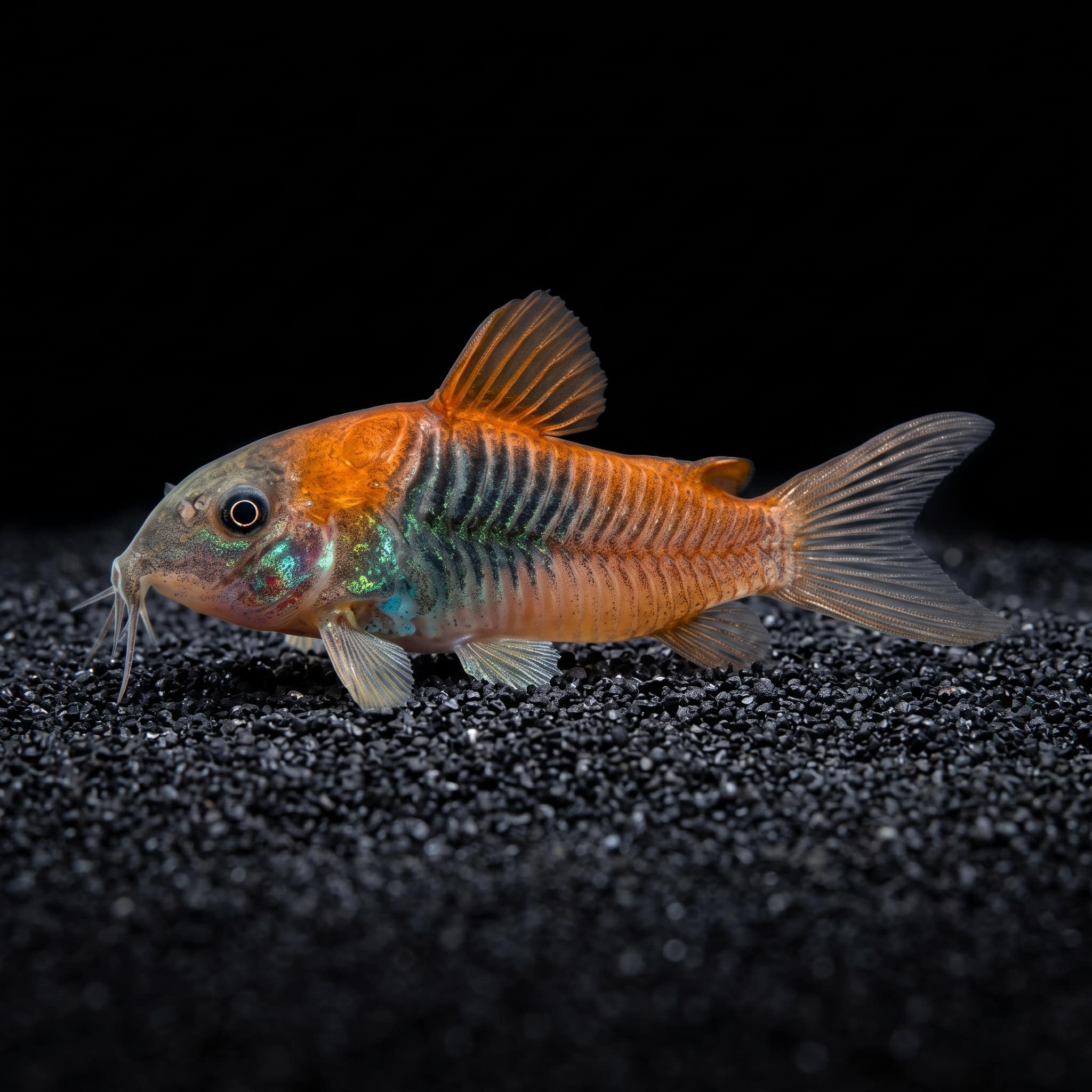

Quick Overview of the Orange Venezuelan Corydoras
The Orange Venezuelan Corydoras (Corydoras venezuelanus), also known as the Venezuelan Red Cory or Orange Bronze Cory, is a captivating freshwater species native to the Orinoco River basin and northern stream systems of Venezuela. Reaching a compact adult size of 2 to 2.5 inches (5 to 6.3 cm), this species stands out for its high-contrast coloration: a brilliant, glowing rust-orange to copper patch spanning its head and upper back, set off by a dark metallic slate-blue to emerald flank. Endlessly active and charmingly social, a group of these bottom-dwellers brings constant movement to the lower layer of your tank.
Tank/Plant Profiles & Environmental Requirements
-
Care Level: Very Easy / Beginner Friendly
-
Growth Rate / Activity: Moderate Growth; Highly Active Bottom-Dwelling Sand Sifter
-
Lighting: Low to Moderate (Appreciates shaded areas provided by hardscape and plants)
-
Temperature: 22°C – 26°C (Thrives in moderate tropical room temperatures)
-
Tank Placement: Exclusive Bottom Layer Dwellers
-
Minimum Tank Size: 15–20 Gallons (Must be kept in a group of 6+ minimum to encourage confident, tight schooling)
Local Care Tips for Bacolod Aquarists
Bacolod Tap Water Match & Barbel Protection: Orange Venezuelan Corys adapt smoothly to Bacolod’s typical neutral-to-slightly-hard tap water (pH 6.8–7.6) when treated with a high-grade dechlorinator. Because they spend all day sifting through substrate looking for food bits, a smooth sand substrate is mandatory to protect their delicate whiskered barbels from wear or infection. Maintain regular water changes to keep bottom water clean and low in nitrates.
Aquascaping Strategy & Epiphyte Care: These corydoras are 100% plant-safe and will gently sift around the edges of carpet plants like Monte Carlo or Dwarf Hairgrass without uprooting them. Frame your midground with easy epiphytes like Anubias Nano, Java Ferns, or Bucephalandra attached to local driftwood or Seiryu stones—just ensure the creeping rhizomes of these epiphytes remain completely exposed above the soil to keep them from rotting!
Dietary Specifics & Community Compatibility: While they are excellent detritus and food scrapers, they require dedicated feeding. Supply their daily diet with high-quality sinking catfish wafers, spirulina tabs, and regular protein treats like frozen bloodworms or baby brine shrimp. They are completely peaceful and make fantastic tankmates for Tetras, Rasboras, Gouramis, Horned Nerite Snails, and adult Neocaridina/Caridina dwarf shrimp.