
Quick Overview of the Albino Sterbai Corydoras
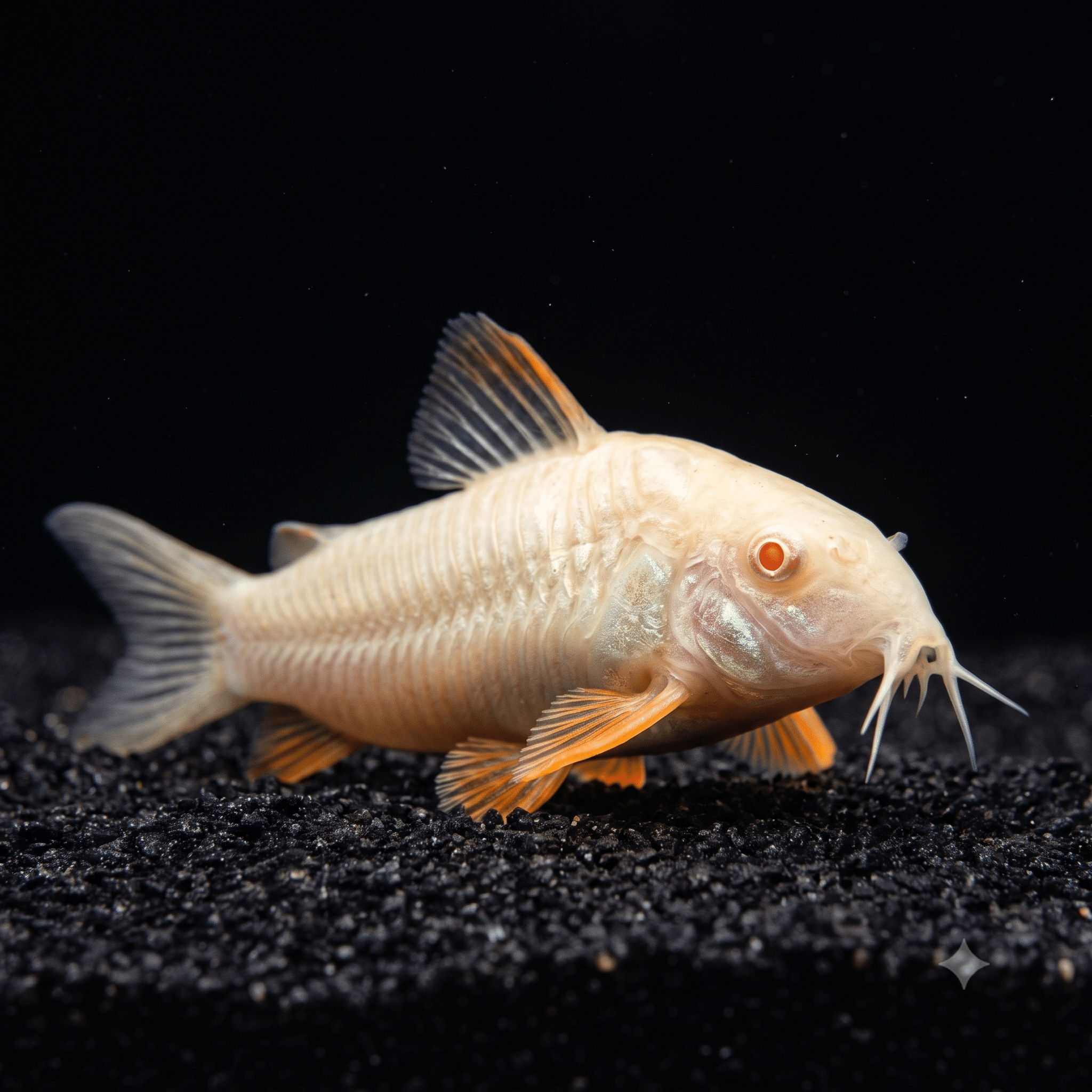
The Albino Sterbai Corydoras (Corydoras sterbai var. “Albino”) is an elite, highly sought-after color mutation of the classic Sterbai Catfish, which natively hails from the warm river basins of Central Brazil. Growing to a compact adult size of 2 to 2.5 inches (5 to 6.3 cm), this premium variety completely lacks dark melanin. In its place, it develops a beautiful, light-reflecting pearlescent white-to-pink torso accented by bright ruby-red eyes. What truly sets the Albino Sterbai apart from common albino corys is its striking heritage: it retains the iconic, vivid neon-orange coloration on its pectoral and ventral fins. As they scurry across the substrate in tight groups, these flashing orange fins create a delightful visual contrast against any dark aquascape.
Tank/Plant Profiles & Environmental Requirements
-
Care Level: Very Easy / Beginner Friendly
-
Growth Rate / Activity: Moderate Growth; Highly Active Bottom-Dwelling Schooler
-
Lighting: Low to Moderate (Bright lights can wash out their pastels and irritate sensitive albino vision)
-
Temperature: 24°C – 28°C (One of the most heat-tolerant Corydoras species in the hobby)
-
Tank Placement: Strictly Bottom Layer (Will occasionally dart to the surface for a quick gulp of air)
-
Minimum Tank Size: 15 Gallons (Must be kept in groups of 6 or more to encourage bold, active behavior)
Local Care Tips for Bacolod Aquarists
Bacolod Climate Synergy & Mineral Tolerances: The Albino Sterbai Corydoras is an exceptional match for Bacolod’s tropical environment! Unlike many cory species that suffer in high temperatures, the Sterbai lineage naturally thrives in warmer water, easily handling our warm summer room temperatures up to 28°C without needing a chiller. Furthermore, they are incredibly robust and adapt beautifully to Bacolod’s typical hard, neutral-to-alkaline tap water parameters. Simply treat your water with a high-grade dechlorinator during weekly maintenance to keep their environment safe.
Mandatory Substrate Selection & Plant Protection: Because Corydoras continuously root through the substrate using delicate facial barbels to hunt for food, a smooth sandy substrate or fine, rounded gravel is 100% mandatory. Coarse, sharp volcanic soils or jagged gravel will scrape and erode their barbels, leading to painful infections. They are 100% plant-safe and lack the strength to chew on your vegetation. They look absolutely stunning school-gliding over a lush green Monte Carlo or Dwarf Hairgrass carpet. Frame their environment with low-maintenance epiphytes like Anubias Nano or Bucephalandra tied to your driftwood. Never bury the rhizomes of these epiphytes to keep them from rotting!
Dietary Specifics & Community Etiquette: Do not make the mistake of assuming these fish can survive solely on tank algae or waste. To keep them plump and healthy, you must feed them a dedicated diet. Offer high-quality sinking catfish pellets, spirulina wafers, and regular protein treats of frozen bloodworms or brine shrimp. They are incredibly peaceful community fish that pair perfectly with tetras, rainbowfish, and dwarf shrimp. Because they are athletic bottom-dwellers that can startle during high-speed feeding or room light transitions, a secure tank lid or mesh cover is highly recommended.