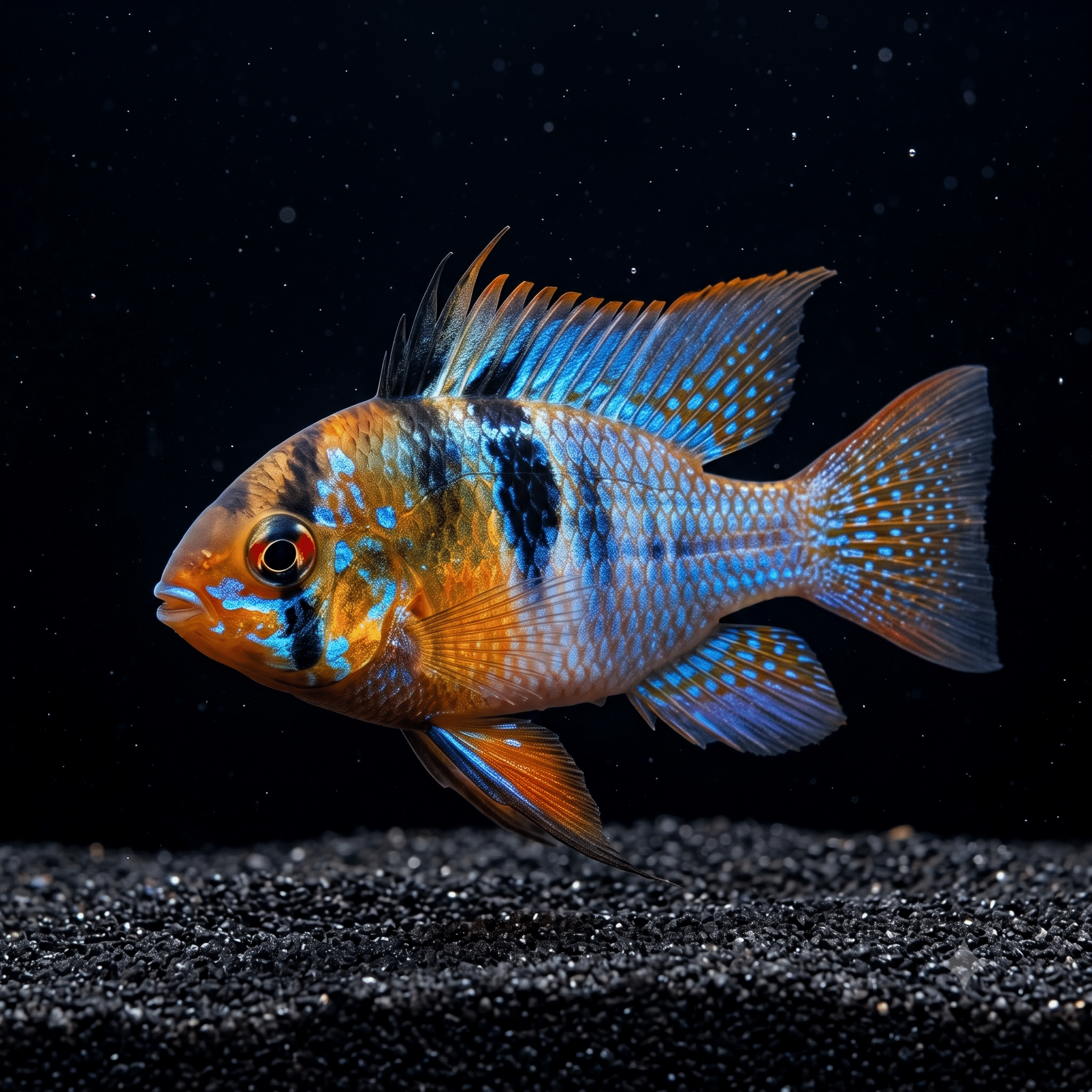

Quick Overview of the German Blue Ram
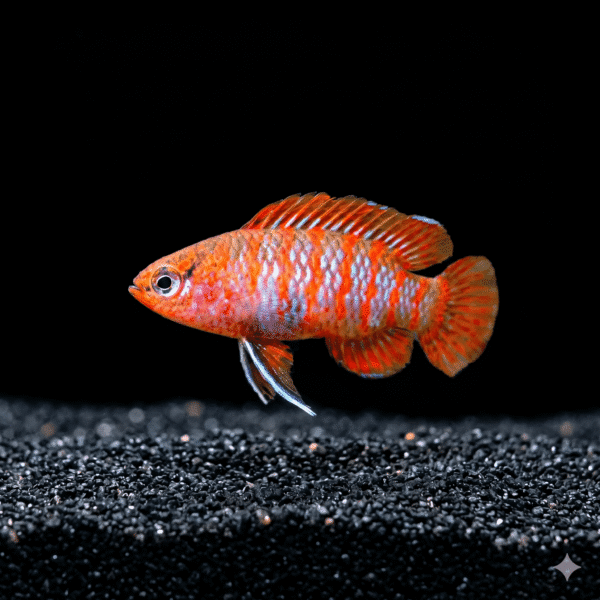
The German Blue Ram (Mikrogeophagus ramirezi), affectionately known as the GBR, is an exceptionally popular and highly coveted freshwater dwarf cichlid native to the slow-moving, heavily vegetated river basins and tropical savanna streams of the Orinoco River system in Venezuela and Colombia. Reaching a highly manageable adult size of 2 to 2.5 inches (5 to 6.3 cm), this species is universally celebrated for having some of the most complex and vivid coloration in the entire aquarium hobby. Mature specimens display a stunning golden-yellow head and chest, moving back into an array of shimmering, light-catching electric blue dots covering their scales and fins. A bold black vertical stripe slices through their brilliant ruby-red eyes, while mature females develop an unmistakable, glowing magenta-pink belly to signify peak breeding readiness.
Tank/Plant Profiles & Environmental Requirements
-
Care Level: Moderate (Requires a well-established tank and stable water conditions)
-
Growth Rate / Activity: Moderate Growth; Highly Interactive & Peaceful Centerpiece
-
Lighting: Moderate (Balanced lighting makes their metallic blue scales instantly pop)
-
Temperature: 26°C – 30°C (Prefers warmer, cozy tropical water)
-
Tank Placement: Mid-to-Bottom Layer Dwellers
-
Minimum Tank Size: 15–20 Gallons (Perfect for community tanks or dedicated breeding pairs)
Local Care Tips for Bacolod Aquarists
Bacolod Water Management & Blackwater Comfort: German Blue Rams are native to soft, pristine, acidic blackwater environments. Because our local Bacolod tap water leans moderately hard and alkaline, setting up a proper conditioning routine is the secret to their long-term health and peak color presentation. We highly recommend aging your tank water with local Talisay (Indian Almond) leaves or high-quality driftwood. The natural humic acids and gentle golden tannins released will buffer the pH down safely, protect their delicate slime coats, and provide the cozy environment they need to thrive. Keeping a strict weekly water change schedule is essential, as they are highly sensitive to nitrate accumulation.
Aquascaping Strategy & Plant Layout: German Blue Rams are intelligent, curious explorers that love having clear territories. Your aquascape layout should feature a soft, sandy substrate paired with smooth river stones, flat slate rocks, and intricate driftwood networks to provide plenty of micro-caves and potential spawning sites. They are 100% safe for high-end planted setups and will look absolutely jaw-dropping gliding over a lush green carpet of Monte Carlo or Dwarf Hairgrass. Frame the midground with low-maintenance epiphytes like Anubias Nano or Java Ferns firmly bound to your hardscape—just ensure the rhizomes of these epiphytes are left completely exposed above the soil to prevent them from rotting!
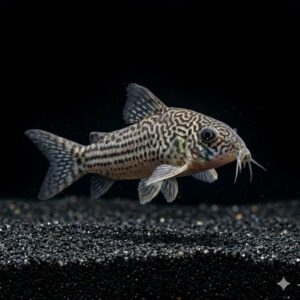
Dietary Specifics & Community Dynamics: To maintain their intense neon-blue iridescence and overall vitality, feed your German Blue Rams a premium, highly varied diet. They enthusiastically accept high-quality sinking micro-pellets, crushed vitamin flakes, and regular high-protein treats of frozen bloodworms or baby brine shrimp. They are remarkably peaceful community fish that pair perfectly with active schooling fish like Tetras, Rasboras, and Corydoras. However, exercise caution if housing them with dwarf Neocaridina/Caridina shrimp, as these opportunistic hunters may occasionally snack on tiny baby shrimplets. Always keep a secure lid on the aquarium to protect them from accidental leaps if startled.