
Quick Overview of the L333 King Tiger Pleco
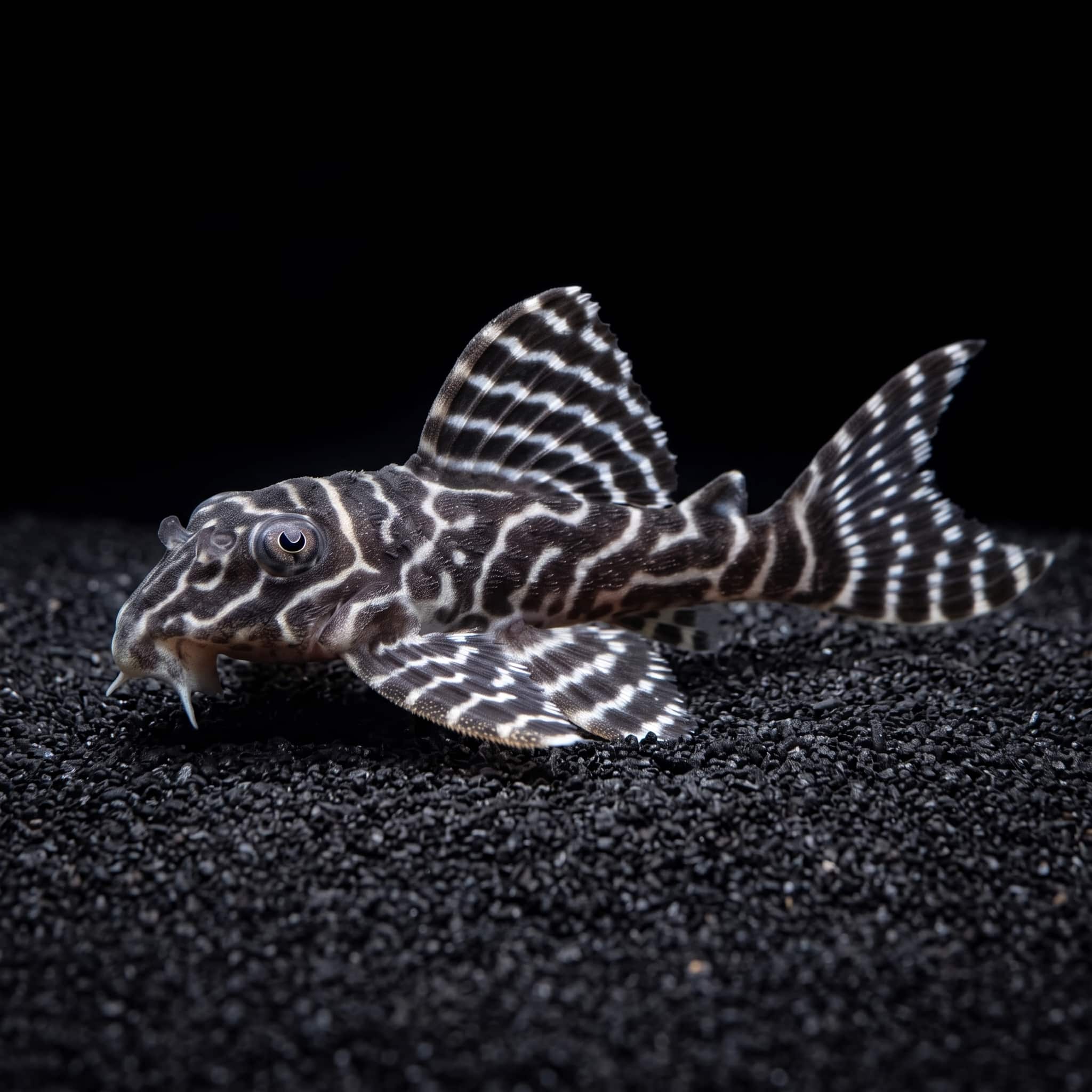
The L333 King Tiger Pleco (Hypancistrus sp. L333) is an incredibly sought-after, premium L-number catfish native to the warm, fast-flowing, oxygen-rich waters of the Rio Xingu basin in Brazil. Reaching a very manageable adult size of 5 to 6 inches (12.7 to 15 cm), it remains compact enough for most standard aquariums, unlike massive common plecos. The L333 is famous for its intricate, highly variable vermiculated (maze-like) pattern of thick, winding jet-black lines painted over a contrasting base of bright white, cream, or warm golden-yellow. A peaceful, slightly reclusive bottom-dweller, it becomes an undeniable centerpiece whenever it emerges from its cave to hunt for food.
Tank/Plant Profiles & Environmental Requirements
-
Care Level: Moderate (Requires pristine water quality, warm temperatures, and high oxygenation)
-
Growth Rate / Activity: Slow Growth; Reclusive Dusk & Night Bottom Scavenger
-
Lighting: Low to Moderate (Appreciates heavily shaded areas provided by dense hardscape and plant canopies)
-
Temperature: 27°C – 31°C (Loves warm, tropical water)
-
Tank Placement: Substrate, Cave & Hardscape Dweller
-
Minimum Tank Size: 30 Gallons for a single specimen; 55+ Gallons for a pair or community setup
Local Care Tips for Bacolod Aquarists
Bacolod Tap Water Match & Oxygenation Needs: The L333 King Tiger Pleco requires warm, highly pristine water to thrive. Bacolod’s tap water is well-suited for them when properly treated with a high-grade dechlorinator during your weekly water changes. Because they originate from the rapids of the Rio Xingu, high dissolved oxygen levels and moderate-to-strong water current are absolutely essential. Utilize a powerhead or an extra air stone to keep water crisp and aerated, particularly since they prefer temperatures on the warmer end of the spectrum.
Essential Cave Layouts & Hardscape Aquascaping: Unlike wood-eating Panaque plecos, the L333 uses hardscape primarily for shelter and territory rather than diet. Design your aquascape with an abundance of tight ceramic breeding caves, stacked Seiryu stone crevices, and networks of local driftwood to provide secure shaded retreats. They are 100% plant-safe and will not consume or damage aquatic vegetation. Frame your midground with robust epiphytes like Anubias Barteri, Java Ferns, or Bucephalandra attached to your rockwork or wood—just ensure the rhizomes of these epiphytes remain completely exposed above the soil to keep them from rotting!
Carnivore Diet & Peaceful Community Etiquette: It is a common misconception that all plecos eat algae. The L333 is a carnivore (meat-eater) and will starve on an algae-only diet. Feed them a dedicated, protein-rich diet consisting of sinking carnivore pellets, high-quality bottom feeder tablets, and regular offerings of frozen bloodworms, brine shrimp, and chopped market shrimp. They are exceptionally peaceful toward other fish, making them outstanding companions for mid-water swimmers like Tetras, Rasboras, Discus, and Geophagus. Males can be territorially aggressive toward other bottom-dwelling plecos, so ensure multiple caves are provided if keeping more than one.