
Quick Overview of the Radiant Yellow Prince Cichlids
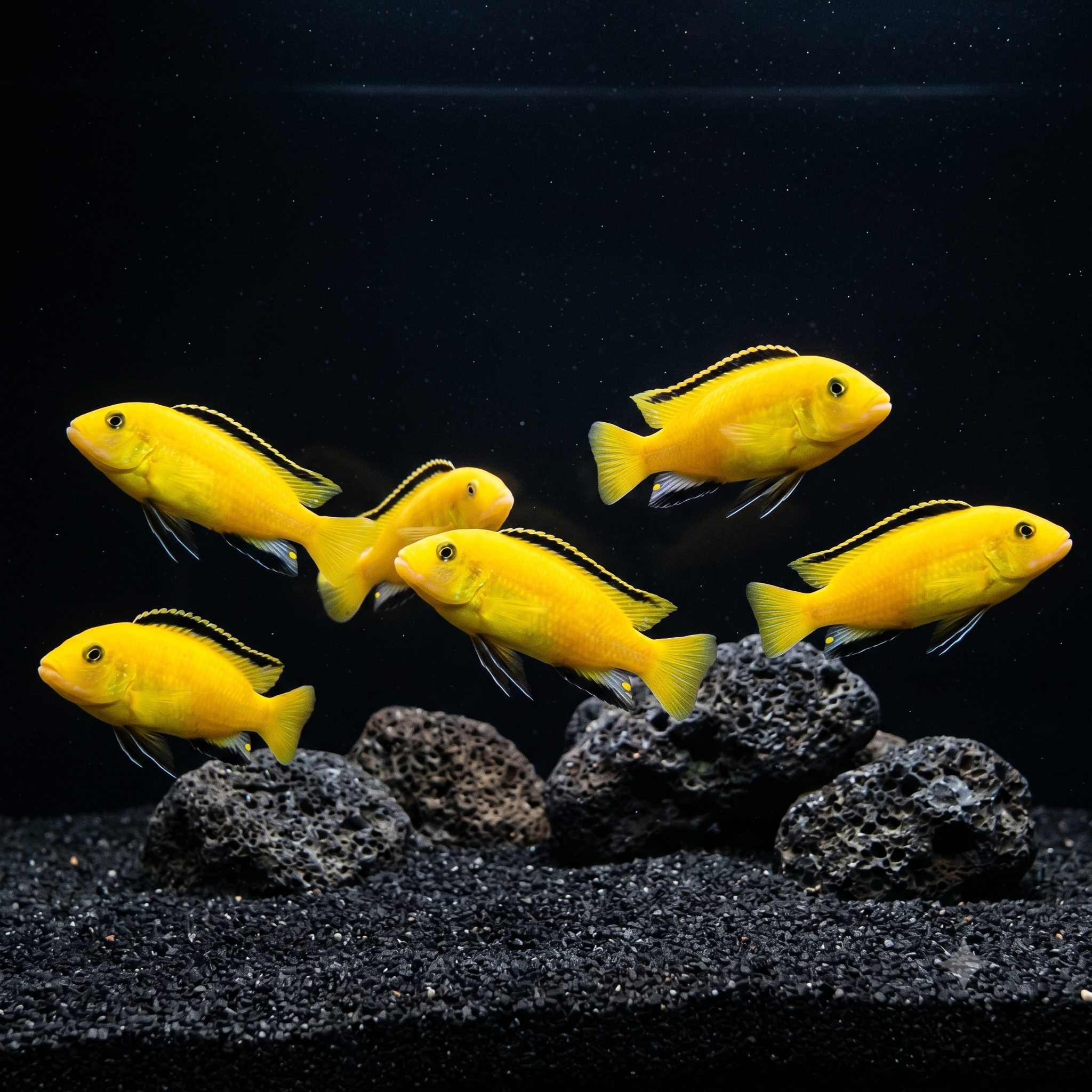
The Yellow Prince Cichlid (Labidochromis caeruleus), natively found inhabiting the deep, rocky coastal waters of Lake Malawi in East Africa, is celebrated worldwide for bringing authentic marine-like color into freshwater aquariums. Growing to a highly manageable adult size of 4 to 5 inches, this species features a breathtaking, un-fading lemon-to-canary yellow body pigmentation.
What makes premium-grade Yellow Prince Cichlids look exceptionally striking is the bold, ink-black coloration running along the top edge of their dorsal fin and the lower edges of their pelvic and anal fins. Unlike many other cichlids where only the dominant alpha male shows intense coloration, both males and females of this species display this incredible neon glow, making them a fantastic choice for a lively group colony display.
Tank Requirements for Your Yellow Prince Cichlid Setup
-
Care Level: Beginner (Exceedingly hardy, forgiving of water shifts, and highly disease-resistant)
-
Minimum Tank Size: 30 to 40 Gallons (Because they are active, territorial rock-dwellers, they thrive best when given a wide, spacious tank footprint)
-
Water Chemistry: Strictly prefers hard, alkaline water with a pH range of 7.5 to 8.5—making them a flawless, effortless match for the natural mineral-rich water conditions found in Bacolod!
-
Temperament: Semi-Aggressive (Widely recognized as the absolute most peaceful, mild-mannered member of the aggressive Mbuna cichlid family)
Local Care Tips for Your Lake Malawi Ecosystem
Bacolod Rockscape & Husbandry Tip: In their native wild habitats, Yellow Prince Cichlids belong to a specialized group of cichlids called Mbuna, which literally translates to “rockfish.” They spend their entire lives darting through intricate underwater caves, crevices, and rocky cliffs.
To make your fish feel right at home here in Negros Occidental, design your layout with a thick bed of smooth aragonite or silica sand, and stack heavy rocks (like Texas Hole Rock, limestone, or slate) to form an intricate network of miniature caves. Stacking plenty of rocks not only mirrors their natural environment but also provides essential hiding spots to break up sightlines, keeping territorial behavior to an absolute minimum.
Because they have a natural instinct to constantly dig and tunnel under rocks to establish their nesting sites, always make sure your rock structures are sitting firmly on the very bottom glass of the aquarium before you pour in the sand. This completely prevents any heavy rocks from accidentally collapsing or tipping over if the fish dig out the sand beneath them!
While they are omnivores, their diet should remain rich in high-quality vegetable matter, spirulina flakes, and specialized cichlid pellets to maintain their intense yellow coloration and prevent digestive issues like “malawi bloat.” Supplement their feedings with occasional treats of frozen bloodworms.
Drop by our Bacolod pet shop today to pick up mineral-rich cichlid sands, premium spirulina pellets, specialized cave rocks, and a gorgeous, vibrant colony of Yellow Prince Cichlids!