
An Introduction to the Classic Peppered Corydoras
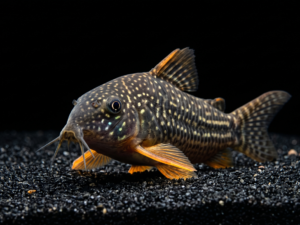
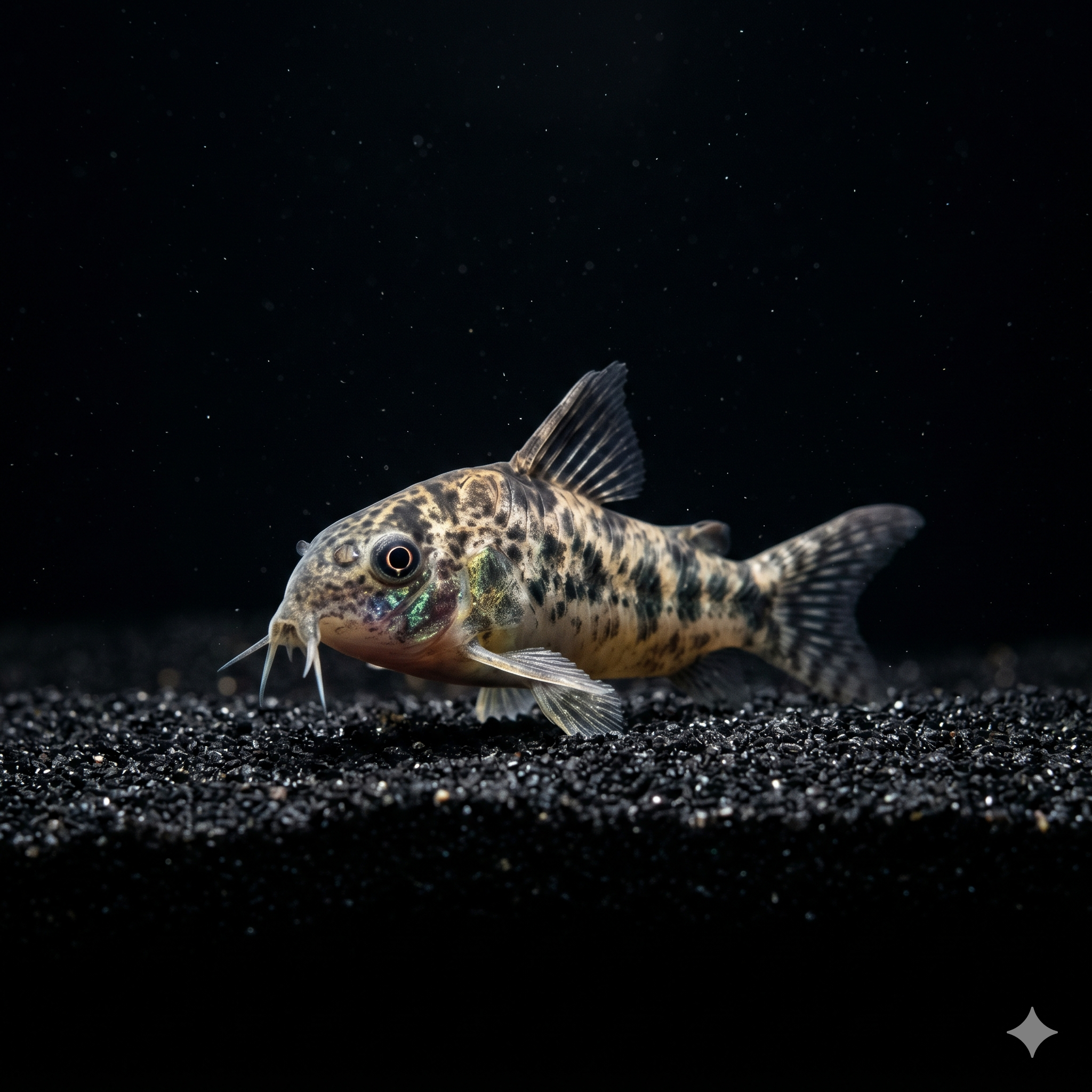
The Peppered Corydoras (Corydoras paleatus), native to the vast, slow-moving river basins and lushly vegetated tributaries of South America, is one of the oldest, most celebrated bottom-dwellers in the entire aquarium hobby. For over a century, this remarkable species has captured the hearts of fishkeepers worldwide due to its unmatched resilience, peaceful disposition, and endless charm. Unlike standard glass-scaled fish, this unique catfish belongs to the Callichthyidae family, meaning its body is heavily protected by dual rows of overlapping, bony armor plates known as scutes.
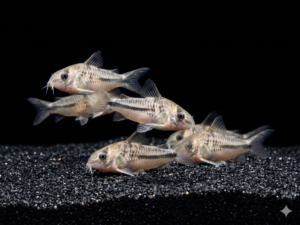
True to its common name, this fish sports an incredibly intricate pattern of dark charcoal and jet-black spots beautifully “peppered” across a lighter, metallic silver-grey base. What makes a healthy school of these catfish an absolute showstopper is their subtle but brilliant iridescence. When viewed under high-quality aquarium lighting, their armored flanks and gill covers catch the light, radiating a gorgeous, hyper-reflective emerald-green and deep bronze sheen. Reaching a compact and highly manageable adult size of 2 to 2.5 inches, they are the perfect size for standard home aquariums.
Understanding Your Peppered Corydoras: Fascinating Behavioural Traits
When you bring a school of Peppered Corydoras into your home, you are introducing a bundle of non-stop personality to your aquarium floor. These fish are highly social, pack-oriented animals that exhibit strong schooling behavior. When kept in proper numbers, they will spend their days moving in perfect unison across the substrate, acting like a miniature aquatic cleanup crew. They are famous for their expressive, highly animated eyes, which frequently tilt downward in a motion that looks exactly like a playful “wink.”
Another fascinating biological trait of this species is their ability to breathe atmospheric air. If you watch your tank closely, you will occasionally see a corydoras suddenly dart to the surface of the water, take a quick gulp of air, and race back down to the bottom. They possess a modified, highly vascularized intestine that allows them to absorb oxygen directly from the air they swallow. While this is a completely normal, healthy evolutionary adaptation designed to help them survive in low-oxygen wild environments, frequent or frantic trips to the surface can also serve as an early visual indicator that your tank’s water parameters need checking or that you require additional surface agitation.
Optimising the Ideal Aquarium Setup for Peppered Corydoras
To ensure your fish thrive for years to come, it is essential to tailor their environment to their natural bottom-dwelling instincts.
-
Care Level: Beginner (Incredibly rugged, forgiving of minor mistakes, and highly disease-resistant)
-
Minimum Tank Size: 15 to 20 Gallons (Because they are highly social, they must strictly be kept in schools of 6 or more to prevent stress and encourage natural, confident behavior)
-
Water Chemistry: Highly adaptable; thrives in a pH range of 6.0 to 8.0, making them a perfect match for local water conditions
-
Temperament: 100% Peaceful (An absolute model citizen that will never show aggression toward any tank mates; entirely safe to house with delicate dwarf shrimp, nano tetras, guppies, rasboras, and dwarf gouramis)
Advanced Care Tips for Your Local Bacolod Climate
While these catfish are exceptionally hardy, they are a sub-tropical species by nature, originating from cooler southern river systems in South America. During the peak of our hot summer months here in Bacolod, water temperatures can spike significantly. To keep your fish stress-free, place your aquarium in the coolest, most well-ventilated room of your house, away from direct sunlight. Utilizing a simple, low-cost aquarium cooling fan to blow across the water’s surface can easily lower the temperature by 1°C to 2°C, keeping them perfectly comfortable.
The single most critical factor for maintaining a healthy school of Peppered Corydoras is your choice of substrate. These fish possess highly sensitive, delicate sensory whiskers around their mouths called barbels, which they use to root through the substrate to locate food particles. If your aquarium utilizes rough, sharp river gravel, crushed volcanic rock, or jagged eco-earths, the abrasive edges will act like sandpaper, wearing down or severely injuring their barbels. This leaves the fish highly vulnerable to deadly, secondary bacterial infections. To prevent this, always house them on a smooth, soft sand substrate (such as fine black sand or cosmetic silica sand). Watching them completely bury their snouts in soft sand as they forage is an absolute joy to witness!
Lastly, it is a common misconception that corydoras are simple garbage collectors that can survive solely on tank waste, algae, or random leftovers from upper-water fish. They are carnivore-leaning omnivores that require a dedicated, high-quality diet of their own. To keep them fat and healthy, regularly drop premium sinking catfish wafers, shrimp pellets, or frozen bloodworms into your tank right as you turn off the main aquarium lights, ensuring your hard-working bottom crew gets a full, nutrient-dense meal.
Drop by our Bacolod pet shop today to pick up ultra-smooth aquarium sand, high-protein sinking pellets, specialized aquarium cooling fans, and a lively, healthy school of Peppered Corydoras to bring your tank floor to life!