
Quick Overview of the Red Neon Blue-Eye Rainbowfish
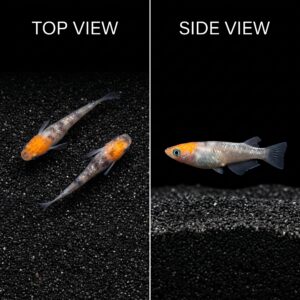
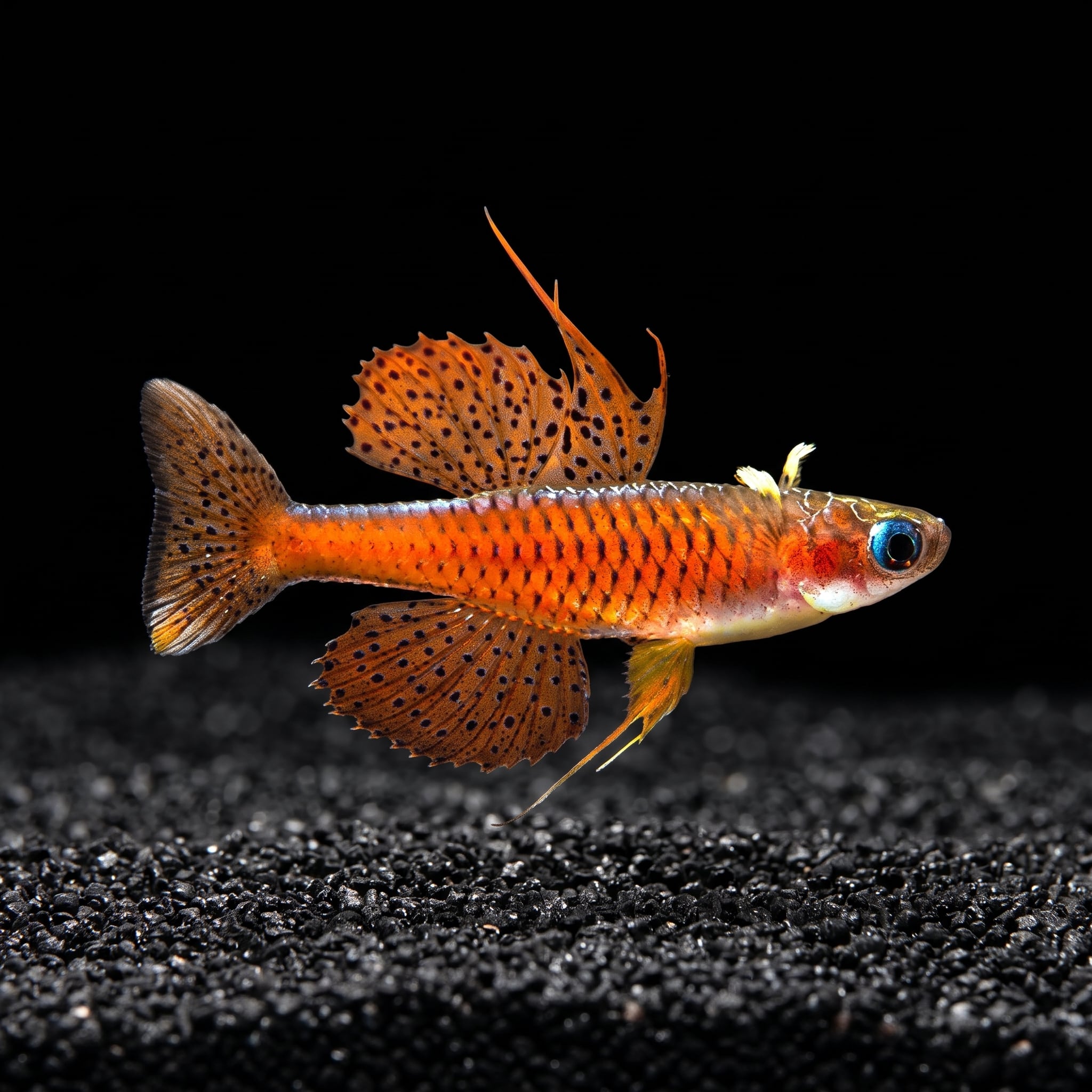
The Red Neon Blue-Eye Rainbowfish (Pseudomugil luminatus), often referred to simply as the Luminatus Rainbow, is an extraordinary nano species discovered in the slow-flowing jungle swamp streams and peat swamps of West Papua, Indonesia. Reaching a compact adult size of just 1.25 to 1.5 inches (3 to 3.8 cm), this fish commands attention far beyond its small footprint. Males feature a fiery, glowing neon-orange body overlaid with subtle red spots and oversized, wing-like dorsal and pectoral fins edged in black and gold. Their most iconic trait is their piercing, light-reflective electric-blue eyes, which appear to glow under aquarium lighting. During sparring and courtship, males flutter their sail fins like miniature butterflies in a captivating territorial dance.
Tank/Plant Profiles & Environmental Requirements
-
Care Level: Easy to Moderate
-
Growth Rate / Activity: Active, Displaying Mid-to-Top Water Column Schooler
-
Lighting: Low to Moderate (Subdued lighting with floating cover brings out their deepest neon hues)
-
Temperature: 24°C – 28°C (Thrives effortlessly in Bacolod’s tropical ambient room temperature)
-
Tank Placement: Upper and Middle Water Column Swimmers
-
Minimum Tank Size: 10–15 Gallons (Must be kept in a mixed-gender group of 6 to 8+ minimum to stimulate confident schooling and frequent male fin displays)
Local Care Tips for Bacolod Aquarists
Bacolod Tap Water Conditioning, Tannins & Flow Synergy: Pseudomugil luminatus adapt smoothly to Bacolod’s typical neutral-to-slightly-hard municipal tap water (pH 6.8–7.5) when treated with a high-grade dechlorinator. Hailing from slow-moving swamp tributaries, they do best in calm water; use a sponge filter or baffle your filter output to avoid strong, turbulent currents. Adding local Talisay (Indian Almond) leaves or natural driftwood provides gentle humic acids and soft tannins, which buffer the water, condition their delicate slime coats, and enhance their fiery orange-red coloration.
Aquascaping Strategy & The Epiphyte Rule: Red Neon Blue-Eyes show their richest colors against dark substrates (such as Black Lava Sand) and lush green plant beds. Provide dense background vegetation (Rotala, Ludwigia) and floating plants (Salvinia, Red Root Floaters) to diffuse surface light and provide overhead security. Frame your hardscape with easy-to-grow epiphytes like Anubias Nano, Java Ferns, or Bucephalandra attached securely to driftwood or rocks—just ensure the creeping rhizomes of these epiphytes remain completely exposed above the substrate to keep them from rotting!
Micro-Dietary Specifics & Community Harmony: Due to their upturned mouths and tiny throats, Red Neon Blue-Eyes cannot consume coarse flake foods. Feed them finely crushed micro-flakes, high-grade spirulina powder, micro-pellets, and regular treats of live or frozen baby brine shrimp, daphnia, or rotifers. They are peaceful community fish that pair seamlessly with Pygmy Corydoras, Otocinclus, Honey Gouramis, and small micro-rasboras. While they are safe alongside adult Neocaridina and Caridina dwarf shrimp, their micropredatory instincts mean they may hunt unprotected newborn shrimplets, so ensure dense moss covers the lower hardscape. A secure, tight-fitting lid is essential, as displaying males can easily leap from open-rim tanks during surface chases.