
Quick Overview of the Honey Gourami
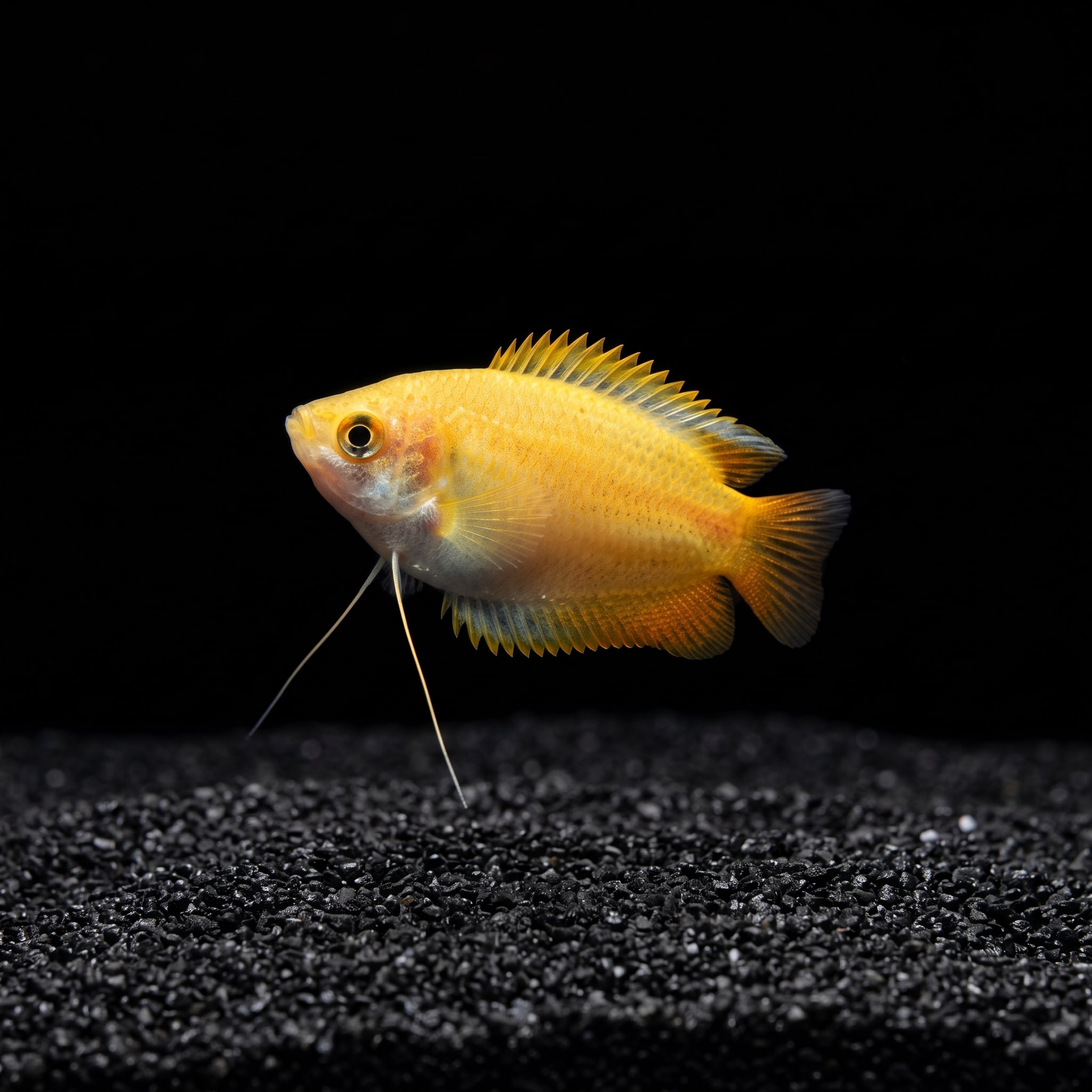
The Honey Gourami (Trichogaster chuna, formerly Colisa chuna) is widely considered one of the most peaceful and endearing labyrinth fish in the aquarium hobby. Native to the heavily vegetated rivers and slow-moving streams of India and Bangladesh, this charming species reaches a compact adult size of just 1.5 to 2 inches (3.8 to 5 cm). While females are a soft, silvery-brown, mature males develop a spectacular, glowing golden-yellow to rich sunset-orange body, often accented by a stark, dark blue-black streak along their throat and belly during courtship displays. Like all labyrinth fish, they possess a specialized organ that allows them to breathe atmospheric air, frequently darting to the surface for a quick gulp.
Tank/Plant Profiles & Environmental Requirements
-
Care Level: Very Easy / Beginner Friendly
-
Growth Rate / Activity: Moderate Growth; Graceful, Inquisitive Mid-to-Top Swimmer
-
Lighting: Low to Moderate (Floating plants provide the shaded security they love)
-
Temperature: 22°C – 28°C (Thrives naturally in Bacolod’s tropical climate)
-
Tank Placement: Mid-to-Top Water Column Dwellers
-
Minimum Tank Size: 10 Gallons for a single/pair; 20+ Gallons for a community setup
Local Care Tips for Bacolod Aquarists
Bacolod Tap Water Match & Gentle Flow Preferences: Honey Gouramis are incredibly hardy and adapt smoothly to Bacolod’s typical neutral-to-slightly-hard tap water (pH 6.8–7.8) when treated with a high-grade dechlorinator. Because they originate from sluggish, slow-moving waters and use a delicate bubble nest for breeding, gentle water flow is absolutely critical. Avoid high-powered wavemakers or harsh filter returns; utilize a sponge filter or baffle your filter output to ensure a calm surface. Keep a tight-fitting lid on the tank to maintain warm, humid air above the water, which is vital for their labyrinth breathing organ.
Aquascaping Strategy & Floating Plant Cover: To bring out their brightest golden-orange colors, they must feel secure. Provide dense thickets of background stem plants and a generous layer of floating plants (like Salvinia, Red Root Floaters, or Water Lettuce). Frame your midground with robust epiphytes like Anubias Nano, Java Ferns, or Bucephalandra attached to local driftwood or Seiryu stones—just remember the golden rule: the creeping rhizomes of these epiphytes must remain completely exposed above the substrate to keep them from rotting!
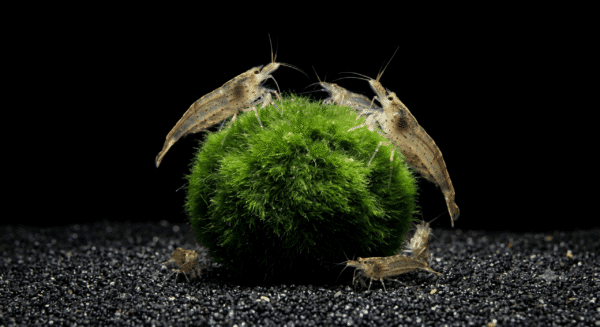
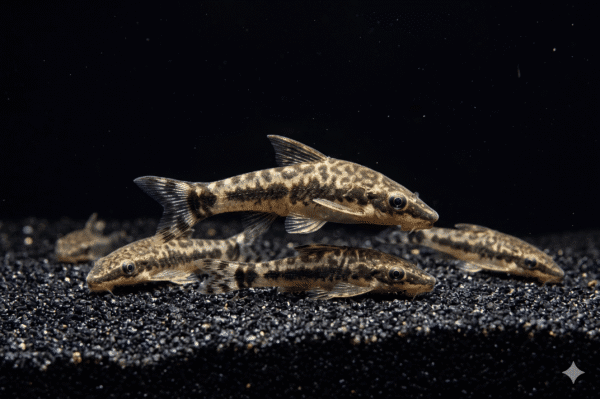
Dietary Specifics & 100% Peaceful Community Etiquette: Honey Gouramis are unfussy omnivores that eagerly accept high-quality tropical flakes, micro-pellets, and regular treats of frozen bloodworms or brine shrimp. Unlike their larger, sometimes territorial cousins (like the Dwarf or Blue Gourami), the Honey Gourami is almost completely non-aggressive. They make outstanding, peaceful centerpieces for communities featuring micro-rasboras (like Chili Rasboras), small Tetras, Corydoras, Otocinclus, and Horned Nerite Snails. While they are very gentle, their inquisitive nature means they may occasionally peck at tiny newborn Neocaridina shrimplets, so providing mossy hiding spots is recommended.