
Quick Overview of the Sanshoku Lame Medaka
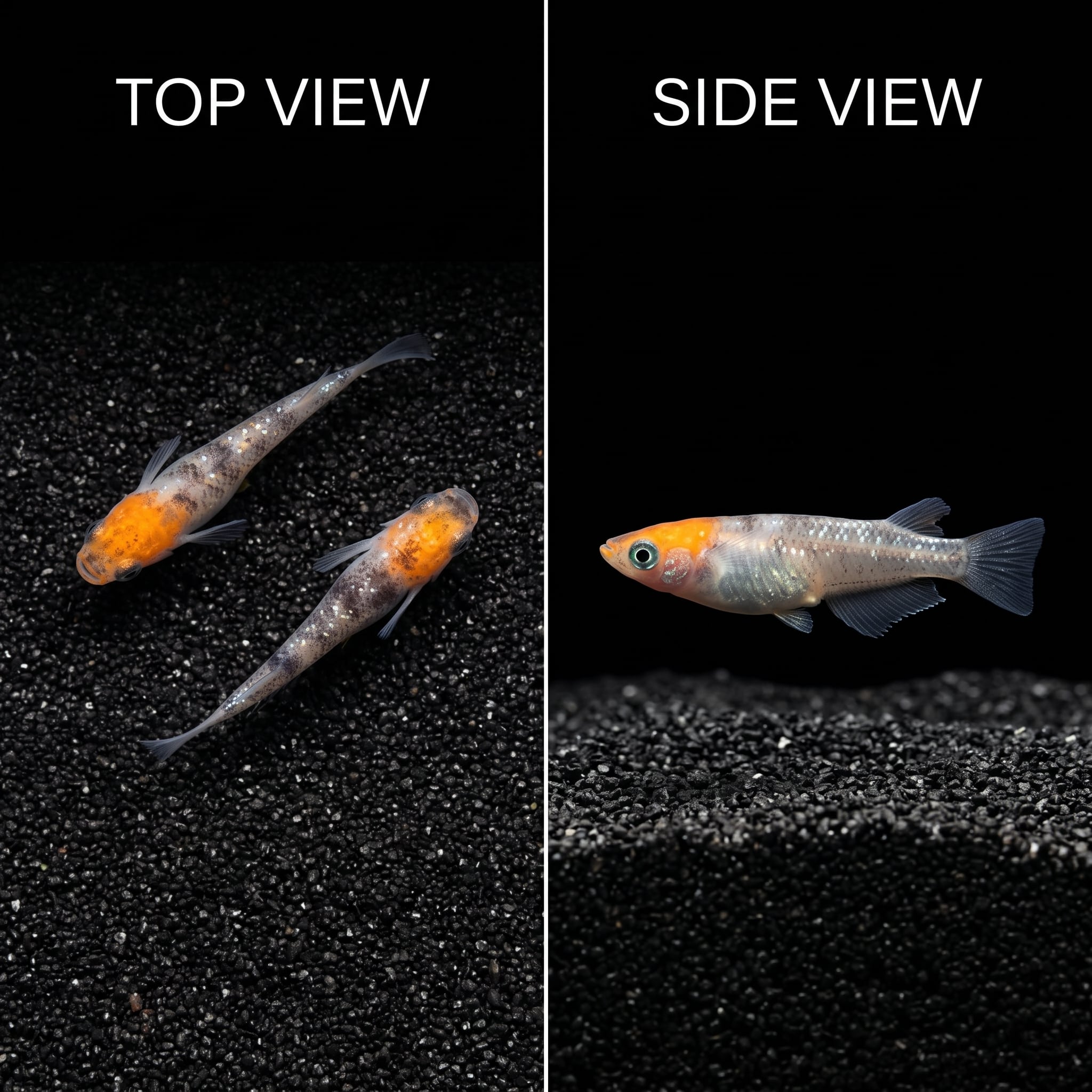
The Sanshoku Lame Medaka (Oryzias latipes var. “Sanshoku Lame”) represents the pinnacle of modern Japanese Rice Fish breeding. Reaching a maximum adult size of 1.5 inches (3.8 cm), this highly sought-after strain combines two distinct genetic traits. “Sanshoku” translates to three colors, giving the fish a beautifully mottled base of vibrant red-orange, pearly white, and inky black patches.
As you can observe in the image above, the “Lame” trait adds a dazzling layer of iridescent, sparkling silver-blue scales heavily concentrated along the dorsal ridge. When viewed from above in a traditional ceramic tub—or from the side in a brilliantly lit glass aquarium—these diamond-like scales catch the light with every movement. Social, highly active, and exceptionally resilient, a school of these glittering Medaka provides non-stop top-water action.
Tank/Plant Profiles & Environmental Requirements
-
Care Level: Very Easy / Beginner Friendly
-
Growth Rate / Activity: Active, Peaceful Top-Water Schooler
-
Lighting: Moderate to High (Crucial for maximizing the reflective pop of their “Lame” glitter scales)
-
Temperature: 16°C – 28°C (Highly adaptable; thrives effortlessly indoors or in outdoor environments)
-
Tank Placement: Exclusive Upper Surface Layer Dwellers
-
Minimum Tank Size: 10 Gallons (Must be kept in a group of 6+ minimum to encourage natural schooling behavior and breeding)
Local Care Tips for Bacolod Aquarists
Bacolod Tap Water, Adaptability & Outdoor Viability: The Sanshoku Lame Medaka is practically bulletproof when it comes to water parameters. They adapt seamlessly to Bacolod’s typical neutral-to-slightly-hard tap water (pH 7.0–8.0); just ensure you condition the water with a high-grade dechlorinator. Because they are native to seasonal temperate climates, they can handle the full range of Bacolod’s tropical temperatures without a heater. They are spectacular candidates for outdoor balcony tubs, lotus bowls, or mini-ponds. Natural sunlight not only intensifies their red and black mottling but also makes their glitter scales shine like shattered glass! If kept indoors, provide gentle water flow (such as from a sponge filter), as they prefer calm waters.
Aquascaping Strategy & Floating Plant Synergy: Medaka feel safest when they have access to dense top-cover. Provide a healthy layer of floating plants like Salvinia, Red Root Floaters, or Water Hyacinth. During breeding season, females will carry clusters of sticky eggs and eagerly deposit them into the dangling roots of these floaters. Frame your underwater hardscape with hardy, easy-to-grow epiphytes like Anubias Nano, Java Ferns, or Bucephalandra attached to local driftwood or rocks—just ensure the creeping rhizomes of these epiphytes remain completely exposed above the substrate to keep them from rotting!
Dietary Specifics & Nano Community Harmony: Due to their small, upward-facing mouths, Medaka feed almost exclusively at the water’s surface. Offer a high-quality diet of crushed floating flakes, micro-pellets, and regular treats of freeze-dried daphnia or live baby brine shrimp to enhance their rich tri-color pigments. They are completely peaceful and 100% safe to house alongside adult Neocaridina/Caridina dwarf shrimp, Horned Nerite Snails, Pygmy Corydoras, and other gentle nano-fish. Remember to use a secure mesh lid if housing them indoors, as energetic surface schooling can occasionally lead to jumping.